REPORT

AI in Customer Onboarding & Success

How Revenue Teams Use AI to Scale Faster Without Adding Headcount

Executive Summary

Customer onboarding has quietly become one of the most important revenue levers, but most organizations still under invest in it. As buying cycles lengthen, budgets tighten, and expectations rise, revenue teams are being asked to deliver faster time-to-value, stronger customer relationships, and measurable retention outcomes without expanding headcount.

Customer success practitioners increasingly point to onboarding as the most critical moment in shaping long term retention and expansion, noting that early delays, misalignment , or lack of structure often create downstream churn that is difficult to recover from.

Artificial intelligence (AI) is emerging as the solution to this tension. It enables teams to scale their onboarding impact without requiring proportional headcount growth, handling repetitive coordination work while allowing CSMs to focus on strategic relationships.

To understand how teams are navigating this shift , OnRamp surveyed 150 customer success leaders across SaaS, FinTech, logistics, healthcare technology, and enterprise B2B.

The data tells a clear story.

AI adoption is nearly universal. Early wins are real. Friction is down, communication is better, and customer satisfaction is up. But execution quality, consistency, and measurement haven't kept pace with the ambition.

In 2026, high-performing teams will be those who've operationalized AI within a unified onboarding system that connects workflows, data, and outcomes across the revenue organization.

How does AI power onboarding?
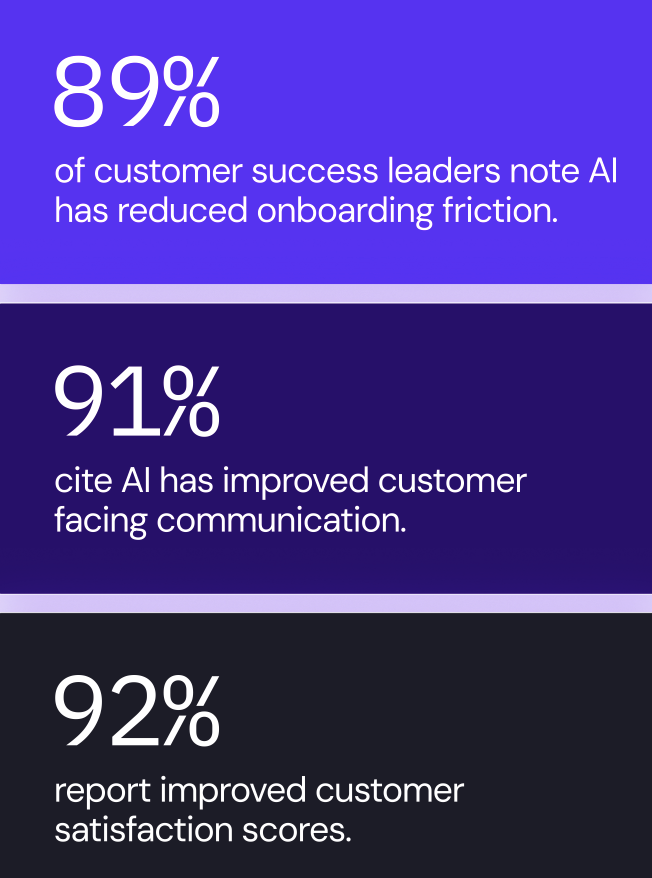
AI IS ALREADY CHANGING HOW ONBOARDING WORK GETS DONE

These reflect meaningful improvements in how onboarding feels to customers and how work flows internally.

At OnRamp, this aligns with what we see consistently in practice. When onboarding is built on clear workflows, shared visibility, and intelligent automation, teams spend less time chasing status updates and more time driving measurable progress. Customers know what's expected and when. Internal teams stay aligned on priorities and execution. Momentum builds faster because everyone operates from a single source of truth.

For chief revenue officers (CROs) and VPs of customer success, this confirms a critical truth. AI is no longer an experiment at the edge of the organization. It is becoming the core infrastructure for the revenue engine.

Screenshot 2026-03-13 at 2.47.21 PM

AI is becoming the answer to the scale problem

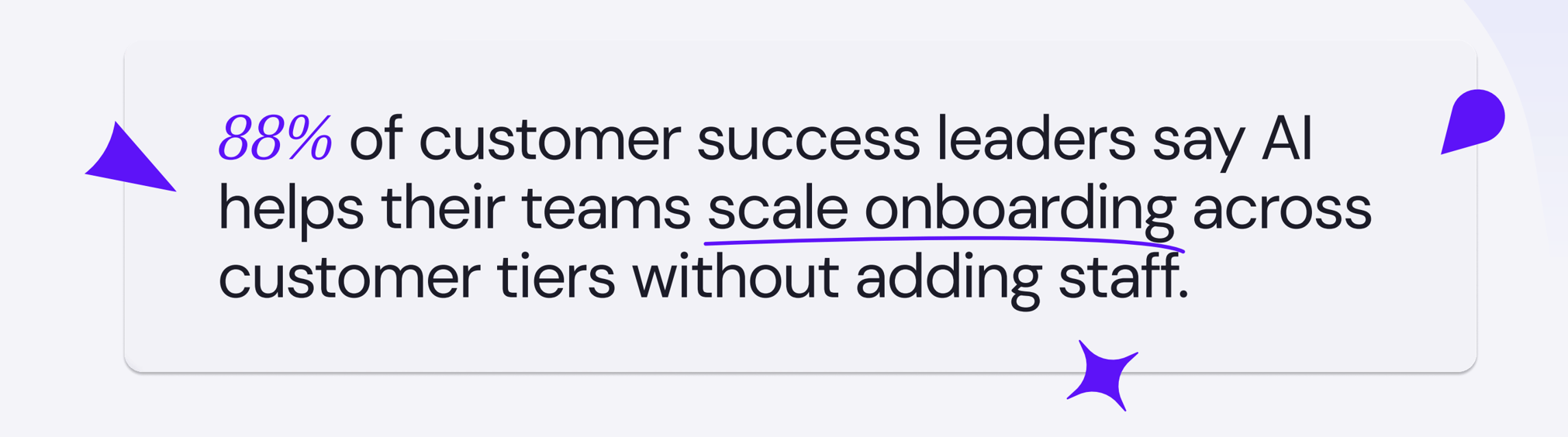
ONE OF THE CLEAREST SIGNALS FROM THE DATA IS ECONOMIC.

AI in Onboarding Stat

This matters because the traditional model of growth no longer works. For years, the solution to scaling customer success was simple: hire more CSMs, expand the team, add headcount. But that approach has hit a wall—revenue doesn't scale linearly with team size, CSM capacity is finite, and burnout is increasingly common as onboarding grows more complex.

AI fundamentally changes this equation by enabling teams to scale their impact without requiring proportional headcount growth. It handles the repetitive, time-consuming work so CSMs can focus on the relationships and strategic moments that actually drive outcomes.

AI does not replace customer success managers. It replaces inefficiency. It automates repetitive follow ups, standardizes task execution, and keeps projects moving without constant human intervention.

OnRamp customers use AI-powered workflows to ensure every onboarding follows the same operational backbone, regardless of customer size or segment. Views give leaders instant visibility into risk, progress, and bottlenecks without manual reporting. CSMs regain time to focus on stakeholder alignment , value realization, and relationship building.

  • For RevOps leaders, this creates predictable capacity and cleaner data.
  • For CS managers, it enables larger books of business without sacrificing quality.
  • For customers, it delivers a smoother and more confident onboarding experience


Adoption is broad, but maturity is low

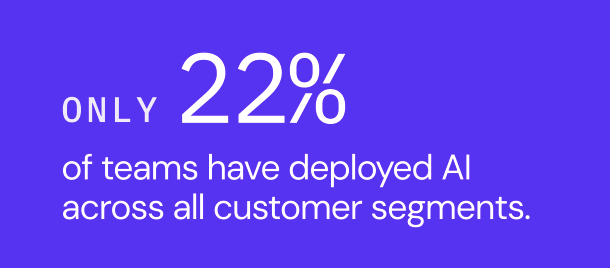
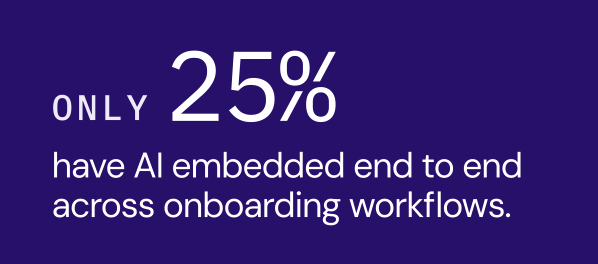
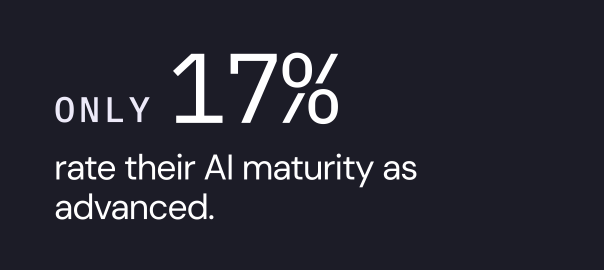
Despite these gains, the data reveals a significant execution gap.

Screenshot 2026-03-13 at 4.01.35 PM
Screenshot 2026-03-13 at 4.01.44 PM
Screenshot 2026-03-13 at 4.01.56 PM

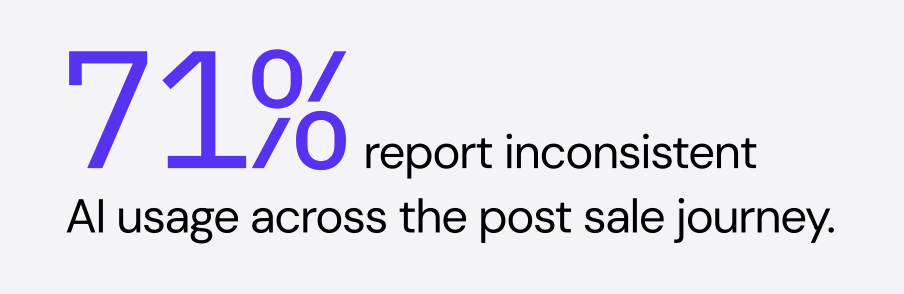
AI exists in disparate systems; summary here, a recommendation there. Then a chatbot layered on top of an otherwise manual process, resulting in inconsistency. This can manifest as different customers receiving different experiences, data not rolling up cleanly, and ultimately, leaders becoming frustrated and unable to trust onboarding signals as predictors of revenue outcomes.

This is the same pattern OnRamp identified in the State of Onboarding report. When onboarding lacks a unified operating system, even the best tools fail to deliver lasting impact.

The teams pulling ahead are not adding more AI features. They are standardizing the onboarding system first , then embedding AI deeply into that system, and refining it for scalability.

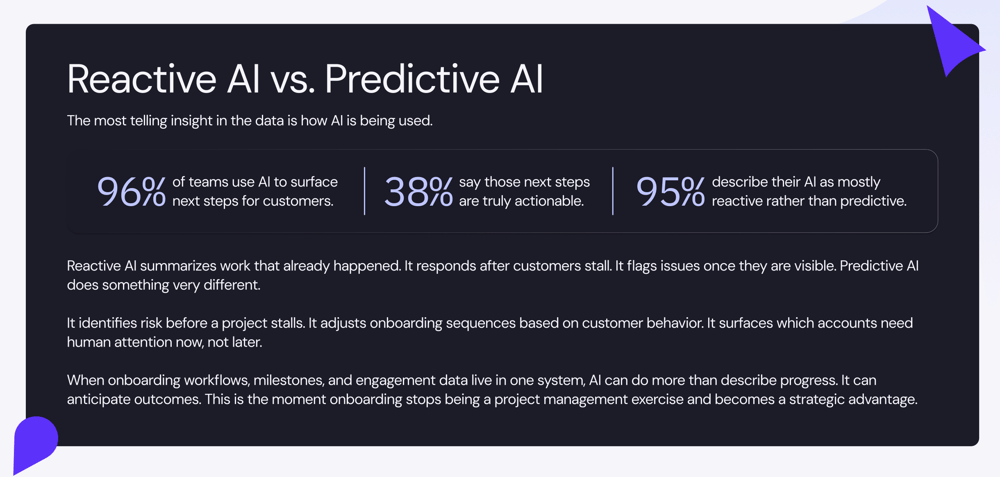
reactive vs predictive ai stats

Onboarding insights are still trapped in silos

Only 35% of respondents say AI insights from onboarding feed into broader customer success strategy.

Screenshot 2026-03-13 at 4.15.32 PM

According to Forrester, most CX teams operate multiple tools simultaneously, which increases complexity and weakens execution when integration and functional clarity are poor. In onboarding, this fragmentation often leads to inconsistent experiences, delayed value realization and limited visibility risk.

Onboarding is the earliest and strongest indicator of future retention, expansion, and churn risk. Delays, missed milestones, disengaged stakeholders, and repeated work all show up early. Yet most of that intelligence never reaches CROs, RevOps teams, or executive leadership.

OnRamp was built to break this pattern.

When onboarding data feeds shared views, executive briefings, and revenue dashboards, teams stop reacting late. Forecasting improves, expansion starts earlier, risk is addressed while there is still time to change the outcome. This is how onboarding becomes a revenue signal, not just a delivery function.      

What high-performing teams do differently

Only 39% of teams say they consistently hit their onboarding goals. The data shows clear differences in how these teams operate.

Screenshot 2026-03-13 at 4.32.59 PM

They adapt based on customer behavior.

36% of top performing teams use AI to sequence onboarding tasks dynamically. Customers who move quickly are not slowed down. Customers who struggle receive more guidance earlier.

Screenshot 2026-03-13 at 4.36.34 PM

They identify stalled accounts early.

Only 30% of respondents use AI to proactively detect stalled onboarding. High performers do not wait for frustration to surface. They intervene before momentum is lost.

Screenshot 2026-03-13 at 4.39.14 PM

They treat AI as a strategic input.

85% of leaders say AI supports strategic decisions, not just operational tasks. Top teams make this real by using onboarding insights to guide staffing, coverage models, and executive priorities. 

Revenue impact is real, but measurement must catch up

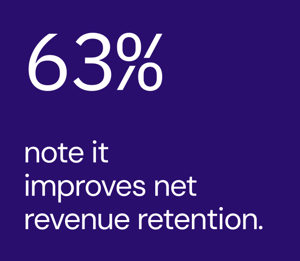
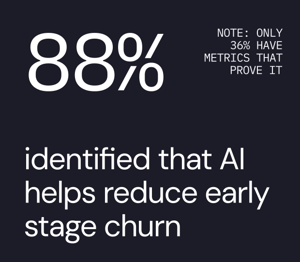
AI DRIVEN ONBOARDING IS BEGINNING TO SHOW FINANCIAL IMPACT.

Screenshot 2026-03-13 at 4.47.48 PM
Screenshot 2026-03-13 at 4.47.56 PM
Screenshot 2026-03-13 at 4.48.04 PM

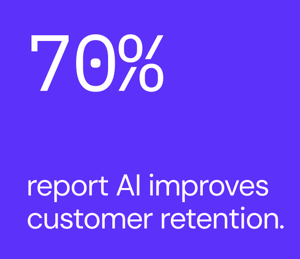
Experience improvements come first. Revenue impact follows when teams measure the connection.

This is where many organizations fall short. Satisfaction improves, but retention is not tracked back to onboarding behaviors. Expansion happens, but early signals are ignored. Churn is reduced, but no one can prove why.

CROs and RevOps leaders must close this loop. AI powered onboarding should be measured against time to value, onboarding completion, stakeholder engagement , early churn, and renewal outcomes. Anything less leaves value unclaimed.

The 2026 leadership playbook     THE PATH FORWARD IS CLEAR.

For CROs, onboarding must be treated as a revenue engine. AI should influence time to value, retention, and net revenue retention, and onboarding insights should inform pipeline and growth planning.

For VPs of customer success, workflows must be standardized before AI is scaled. Predictive signals and adaptive journeys should replace static project plans. AI should absorb repetitive work so CSMs can focus on value delivery.

For customer success managers, AI should be a daily execution partner. Stalled account signals should trigger immediate action. Onboarding experiences should be simple, clear, and easy for customers to follow.

For RevOps leaders, onboarding data must be integrated into core systems and dashboards. AI priorities should align directly to measurable KPIs including time to first value, onboarding completion, engagement, churn, and renewal performance. 


Conclusion

This research makes one thing unmistakable:

AI is already improving onboarding outcomes for most teams. The next wave of advantage will come from depth, discipline, and integration.

Revenue teams that embed AI across onboarding workflows, shift from reactive to predictive use cases, and connect insights to strategy will scale faster without adding headcount. They will onboard customers more effectively, free their teams to build real relationships, and create happier customers who expand and renew.

AI is no longer optional in customer onboarding and success. It is the foundation of the modern revenue engine.

Want to see OnRamp's AI Onboarding in Action?

See how OnRamp's AI-powered platform helps revenue and operation teams deliver faster, more engaging onboarding experiences that drive customer action and retention.